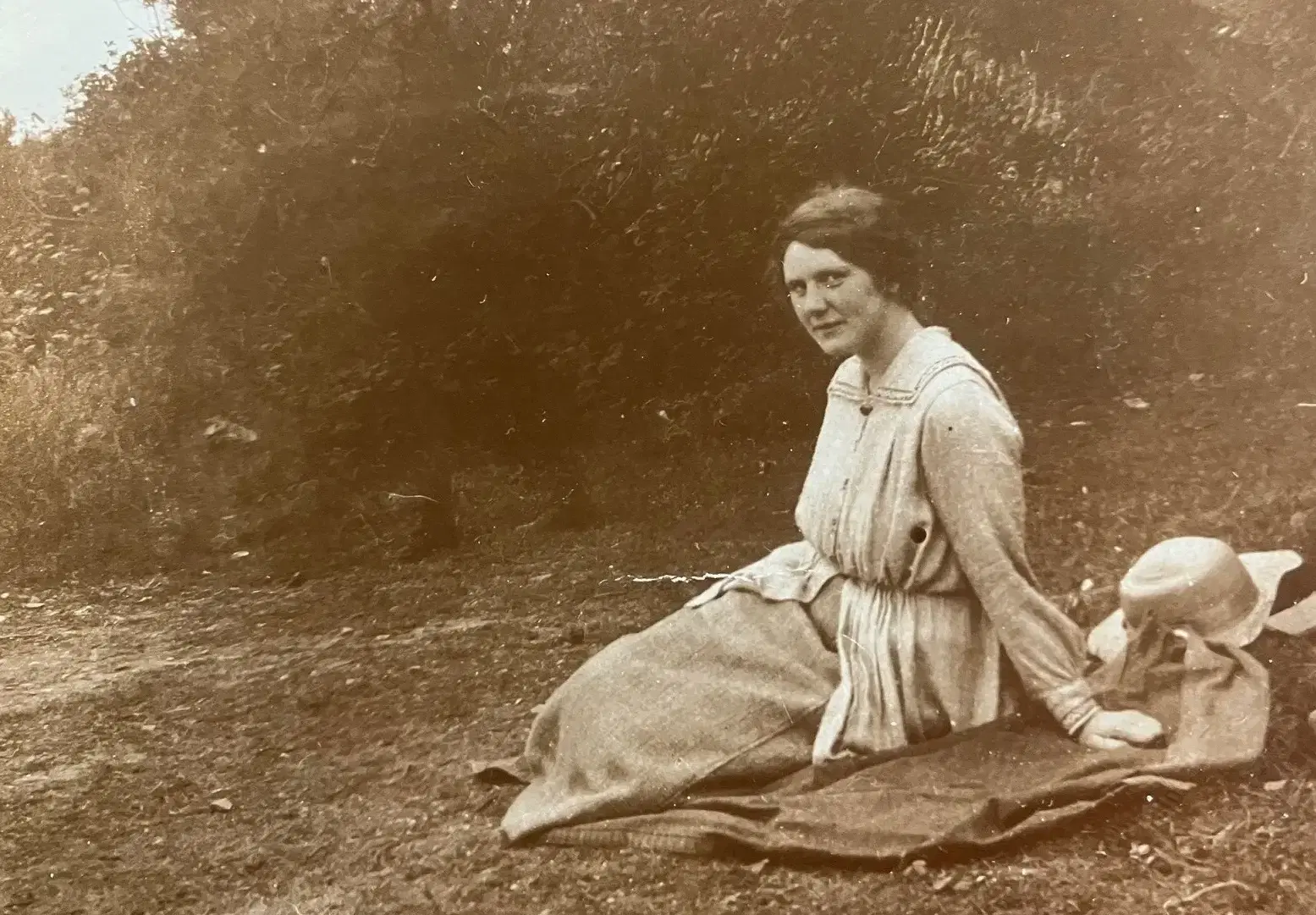
Nan Shepherd
My favorite quotes from Nan Shepherd's The Living Mountain, her exquisite book about the Cairngorm mountains in Scotland:
No, there is more in the lust for a mountain top than a perfect physiological adjustment. What more there is lies within the mountain. Something moves between me and it. Place and a mind may interpenetrate till the nature of both is altered. I cannot tell what this movement is except by recounting it.
These mountain flowers look inexpressibly delicate; their stems are slender, their blossoms fragile; but burrow a little in the soil, and roots of a timeless endurance are found. Squat or stringy, like lumps of dead wood or bits of sinew, they conserve beneath the soil the vital energy of the plant. Even when all the upper growth is stripped–burned or frosted or withered away–these knots of life are everywhere. There is no time nor season when the mountain is not alive with them. Or if the root has perished, living seeds are in the soil, ready to begin the cycle of life afresh. Nowhere more than here is life proved invincible. Everything is against it, but it pays no heed.
Then we idled up the side, facing the gaunt corrie, and at last, when the noonday sun penetrated directly into the water, we stripped and bathed. The clear water was at our knees, then at our thighs. How clear it was only this walking into it could reveal. To look through it was to discover its own properties. What we saw under water had a sharper clarity than what we saw through air. We waded on into the brightness, and the width of the water increased, as it always does when one is on or in it, so that the loch no longer seemed narrow, but the far side was a long way off. Then I looked down; and at my feet there opened a gulf of brightness so profound that the mind stopped. We were standing on the edge of a shelf that ran some yards into the loch before plunging down to the pit that is the true bottom. And through that inordinate clearness we saw to the depth of the pit. So limpid was it that every stone was clear. I motioned to my companion, who was a step behind, and she came, and glanced as I had down the submerged precipice. Then we looked into each other’s eyes, and again into the pit. I waded slowly back into shallower water. There was nothing that seemed worth saying. My spirit was as naked as my body. It was one of the most defenceless moments of my life.
For the most appalling quality of water is its strength. I love its flash and gleam, its music, its pliancy and grace, its slap against my body; but I fear its strength. I fear it as my ancestors must have feared the natural forces that they worshipped. All the mysteries are in its movement. It slips out of holes in the earth like the ancient snake. I have seen its birth; and the more I gaze at that sure and unremitting surge of water at the very top of the mountain, the more I am baffled. We make it all so easy, any child in school can understand it–water rises in the hills, it flows and finds its own level, and man can’t live without it. But I don’t understand it. I cannot fathom its power. When I was a child, I loved to hold my fingers over the tap at full cock and press with all my puny strength until the water defeated me and spurted over my newly-laundered frock. Sometimes I have had an insane impulse to hold back with my fingers a mountain spring. Absurd and futile gesture! The water is too much for me. I only know that man can’t live without it. He must see it and hear it, touch and taste it, and, no, not smell it, if he is to be in health.
The intense frost, the cloudless sky, the white world, the setting sun and the rising moon, as we gazed on them from the slope of Morrone, melted into a prismatic radiation of blue, helio, mauve, and rose. The full moon floated up into green light; and as the rose and violet hues spread over snow and sky, the colour seemed to live its own life, to have body and resilience, as though we were not looking at it, but were inside its substance.
These moments of quiescent perceptiveness before sleep are among the most rewarding of the day. I am emptied of preoccupation, there is nothing between me and the earth and sky. In midsummer the north glows with light long after midnight is past. As I watch, the light comes pouring round the edges of the shapes that stand against the sky, sharpening them till the more slender have a sort of glowing insubstantiality, as though they were themselves nothing but light. Up on the plateau, light lingers incredibly far into the night, long after it has left the rest of the earth. Watching it, the mind grows incandescent and its glow burns down into deep and tranquil sleep.
A certain kind of consciousness interacts with the mountain-forms to create this sense of beauty. Yet the forms must be there for the eye to see. And forms of a certain distinction: mere dollops won’t do it. It is, as with all creation, matter impregnated with mind: but the resultant issue is a living spirit, a glow in the consciousness, that perishes when the glow is dead. It is something snatched from non-being, that shadow which creeps in on us continuously and can be held off by continuous creative act. So, simply to look on anything, such as a mountain, with the love that penetrates to its essence, is to widen the domain of being in the vastness of non-being. Man has no other reason for his existence.
Walking thus, hour after hour, the senses keyed, one walks the flesh transparent. But no metaphor, transparent, or light as air, is adequate. The body is not made negligible, but paramount. Flesh is not annihilated but fulfilled. One is not bodiless, but essential body. It is therefore when the body is keyed to its highest potential and controlled to a profound harmony deepening into something that resembles trance, that I discover most nearly what it is to be. I have walked out of the body and into the mountain. I am a manifestation of its total life, as is the starry saxifrage or the white-winged ptarmigan. So I have found what I set out to find. I set out on my journey in pure love.