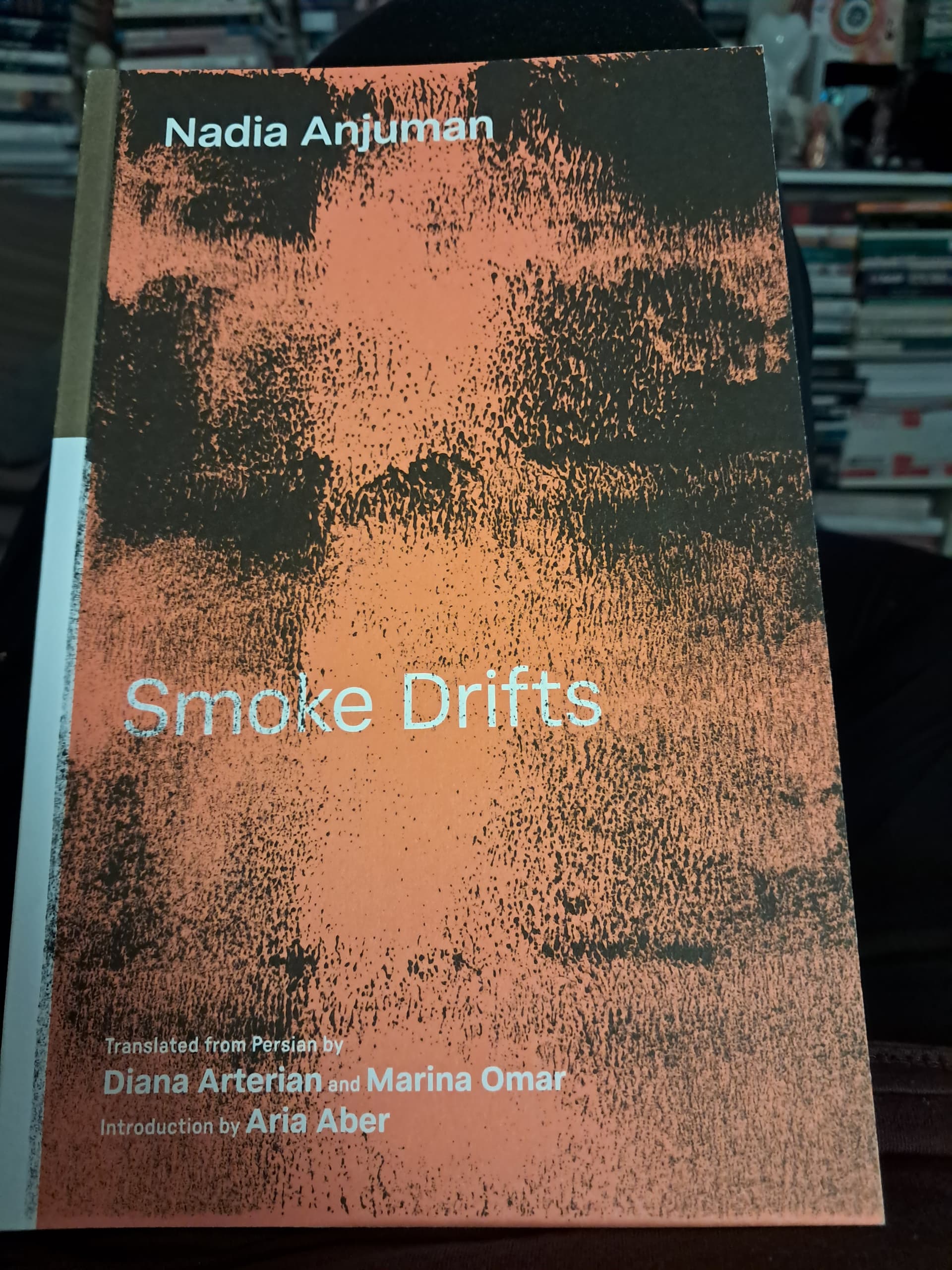
Tonight, I started reading Nadia Anjuman's Smoke Drifts. Anjuman was a gifted Afghan poet who wrote under terrible persecution and confinement. In 2005, at the age of 24, she was brutally murdered by her husband.
At Literary Hub, translator Diana Arterian writes:
Anjuman’s murder doesn’t make her unique—depressingly, it’s quite the opposite. The circumstances of her death link her to innumerable women across time and space. What makes Anjuman remarkable is her poetry—her ferocity and unfailing desire to continue to participate in this ancient art. How she enshrines her humanity with the poetic line.
She also writes about Anjuman's participation in a secret group that gathered under the guise of sewing but, instead, discussed classic literature:
As a teenager, desperate to learn literature, Nadia Anjuman secretly attended the Golden Needle School in her home city of Herat, Afghanistan. The women attendees hid books beneath their needlepoint, children playing in the yard to warn them of approaching Taliban morality police. If they were caught, the students could be killed as punishment. The result of Anjuman’s education is profound—reading her poems, her deep knowledge of ancient Persian poetry and contemporary writing shimmers on every page.
I'm only a few pages into the book, but Anjuman's poems brim with longing, passion, and a spirit of resistance. I'm grateful to the publisher, World Poetry Books, for making her work available to more people in the English-speaking world.