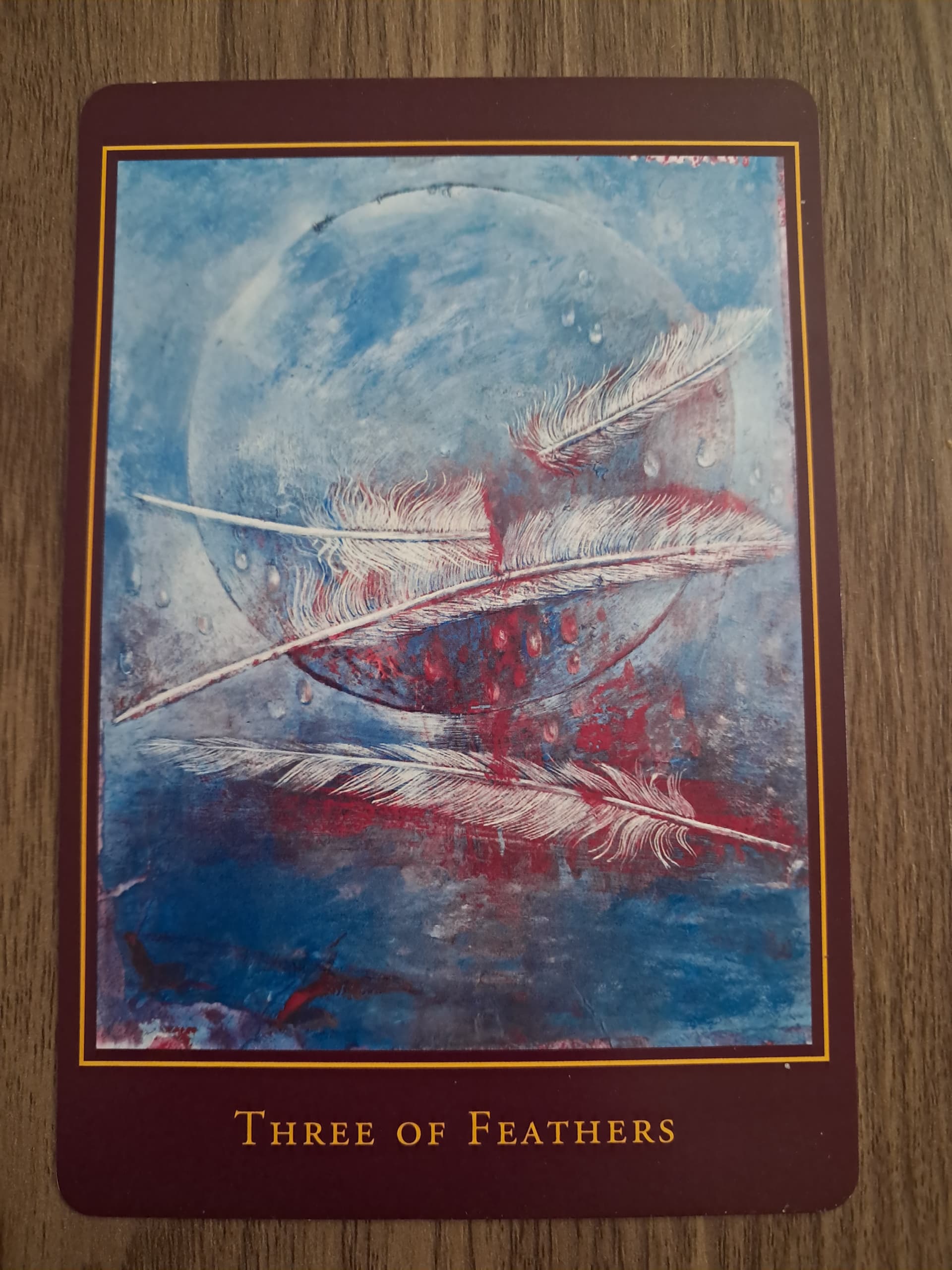
I pulled the 3 of Swords from the Margarete Petersen deck. She uses feathers for the swords. This is a card of pure heartbreak, but I find it consoling. In the traditional Rider Waite Smith imagery, there are 3 swords piercing a heart. Petersen has chosen to depict blood-soaked feathers. For me, this is a card about honoring one's pain. My mother is gone. It is devastating. It is annihilating.
I am reminded of an email I wrote to a friend in 2024. I am sharing it here because some of it is relevant. My mother was alive at the time, but her health was on the decline, and I was her caregiver.
In the email, I wrote:
There is an agony in the swords that puncture the heart, and it's this agony that brings growth and gifts. I'm not sure I believe this about all suffering. For instance, I would never say my father's death is a gift. I'm unable to frame things in that way personally. But, when it comes to romantic rejection or unrequited love or a suffering where no one dies or is physically harmed, I'm able to attach some kind of meaning to it in order to carry it.
The two literary passages are ones I've been thinking about a lot. This one by Oscar Wilde has actually helped me through my own dark night of the soul the last few years. I came across it in Thomas Moore's excellent book "Care of the Soul." Oscar Wilde's story moves me deeply. He suffered terribly when he was imprisoned for homosexuality. It changed him forever, and he was able to find the richness in his suffering:
"I learnt many things in prison that were terrible to learn, but I learnt some good lessons that I needed. I learnt gratitude: and though, in the eyes of the world, I am of course a disgraced and ruined man, still every day I am filled with wonder at all the beautiful things that are left to me: loyal and loving friends: good health: books, one of the greatest of the many worlds God has given to each man: the pageant of the seasons: the loveliness of leaf and flower: the nights hung with silver and the dawns dim with gold. I often find myself strangely happy. You must not think of me as being morbidly sad, or willfully living in sadness, that sin which Dante punishes so terribly. My desire to live is as intense as ever, and though my heart is broken, hearts are made to be broken: that is why God sends sorrow into the world. The hard heart is the evil thing of life and of art. I have also learnt sympathy with suffering. To me, suffering seems now a sacramental thing, that makes those whom it touches holy."
Perhaps one of the lessons of the 3 of Swords is that the heart is a very soft and vulnerable organ. Those swords easily slide into it. I think heartbreak reminds us of our fragility, our humanity. Maybe, in that way, it expands our empathy and humanity. And it is good that the heart is soft and can be pierced, because if it could not be punctured that would mean it is hard and unfeeling.
This quote by Clarissa Pinkola Estés is from "Untie the Strong Woman." I'm sharing sections of it but you can read the entire passage at the link I've included. Clarissa is writing about Our Lady of Sorrows and the seven swords that are shown piercing the Virgin Mary's heart:
"The swords through your heart are not the ones that caused your wounds, but rather, these swords of strength were earned by your struggle through hard times.
The second, Sword of Veils, pierces the hidden meaning of this time to cut right through all the fog, all the veiling that occludes the center, the core, the sweetness, the heart, the hope, the jewel at the center of the wound.The Sword of New Life to cut through, to cut loose, and to plant anew. Long ago, people used their swords to plant with. They would drive them into the ground, pour the seed, take a step, drive the sword into the ground, plant a seed, take a step."
Now that I'm writing this, another passage comes to mind, also from Thomas Moore's "Care of the Soul." It's written by Moore himself. Maybe it will resonate for you:
"The Greeks told the story of the minotaur, the bull-headed flesh-eating man who lived in the center of the labyrinth. He was a threatening beast, and yet his name was Asterion—Star. I often think of this paradox as I sit with someone with tears in her eyes, searching for some way to deal with a death, a divorce, or a depression. It is a beast, this thing that stirs in the core of her being, but it is also the star of her innermost nature. We have to care for this suffering with extreme reverence so that, in our fear and anger at the beast, we do not overlook the star."
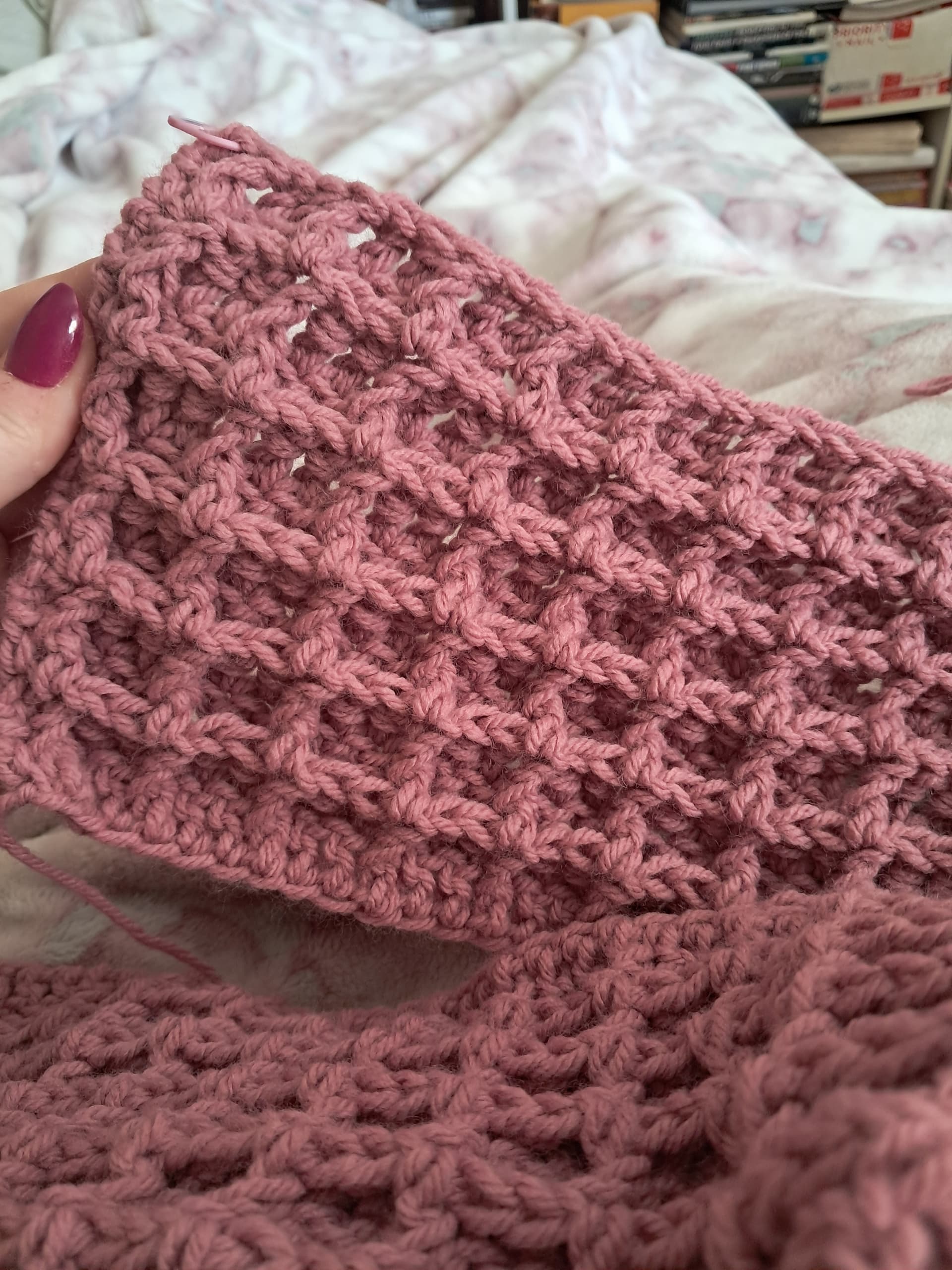
My waffle stitch blanket is coming along nicely!
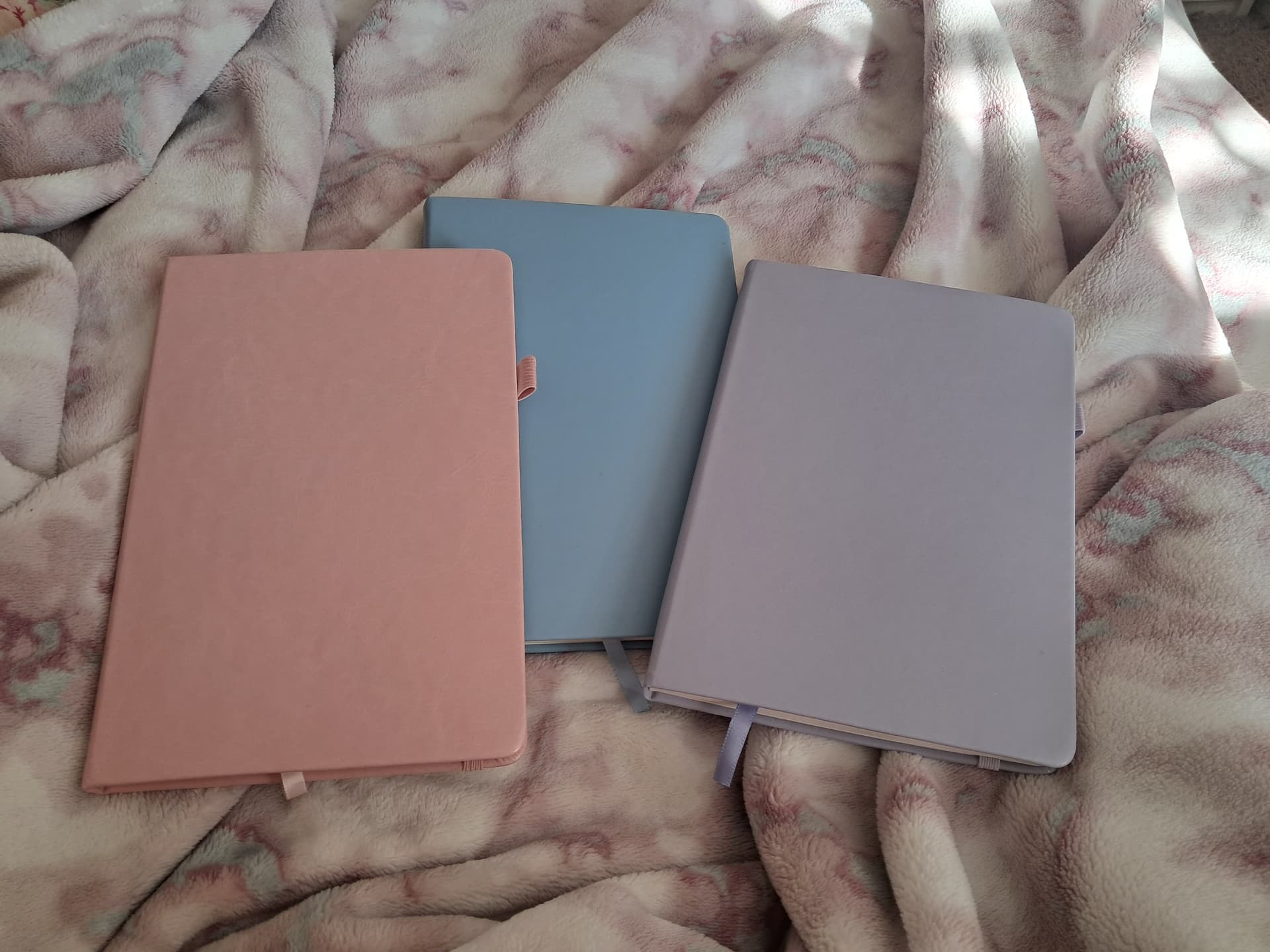
I have a new journaling system. I picked up a set of these beautiful pastel diaries. I love how they are color-coordinated. The pink is my commonplace book where I throw quotes and poetry fragments. I've never kept a commonplace book, but I'm loving it so far. The blue is my daily journal. The purple is my reading journal where I write about the books I read.