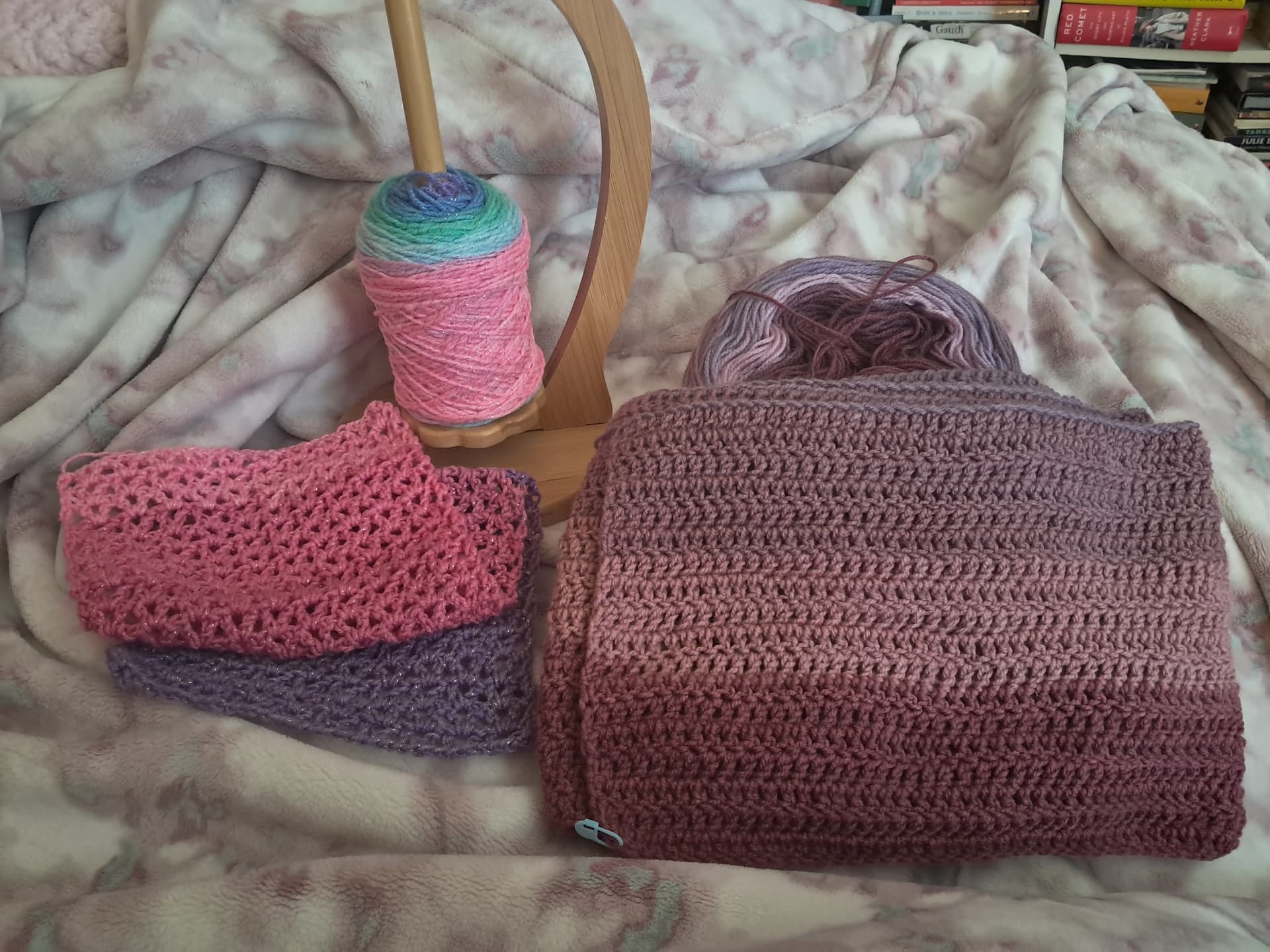
The poncho (on the right) is growing. I've been at it for about a month! Last night, I decided to start a scarf (on the left) as a quick project. I am loving it so far. The yarn is sparkly. I've decided to call it the Ophelia Scarf because I've been listening to some songs lately that are about Ophelia. I'm also thinking about doing another shawl. I cannot stop crocheting!
As I was walking by the woods beside my home, I saw the blanket of leaves covering the ground. I had the most intense desire to crawl under the leaves, to disappear into the earth.
My mother's death terrorizes me. It terrorizes me. I don't know how else to describe it.
“Writing is not therapy. That’s the last thing it is. I still have my grief.”
— Alice Notley, The Paris Review
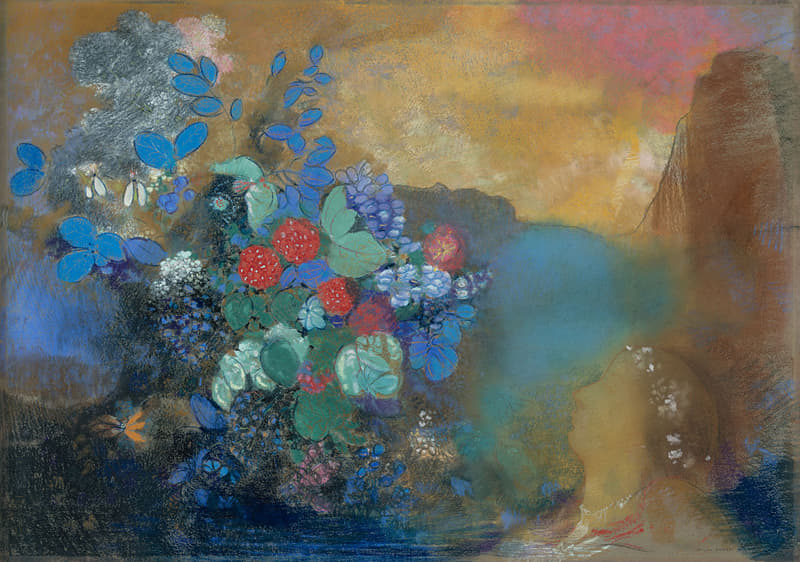
Odilon Redon - "Ophelia Among the Flowers" (1905-8)
"Redon creates an undefined space that lacks any clear indication of either location or scale. We see only Ophelia’s head, placed close to the picture’s edge in the lower right corner. Tilted back, and in profile, it is suspended or perhaps floating. In contrast to the vibrant flowers that surround her, Ophelia is drained of colour. Her closed eyes suggest she may already be dead, or possibly she is only sleeping. Garlanded by flowers, she merges with the plants that surround her.
The story of Ophelia recalled older narratives of doomed young love, such as the story of Orpheus, another popular subject in art, literature and music. This association of youthful and transient beauty with dreaming, sleep and death was a recurrent theme in Romantic and Symbolist art and literature in the late nineteenth century. In the 1890s Sigmund Freud began his pioneering research into dreams and the unconscious, which culminated in his landmark book The Interpretation of Dreams, published in 1900. But the fate of Ophelia may also have had a personal resonance for Redon: in July 1888 he had watched, helpless, as his friend and collaborator, the young critic Emile Hennequin, had drowned.
Although it has a literary source, Ophelia among the Flowers is more than an illustration of a text. Instead, Redon creates a dream-like response to Shakespeare’s drama that functions as an image in its own right. As Redon observed, ‘My drawings inspire, and are not to be defined. They place us, as does music, in the ambiguous realm of the undetermined.’"
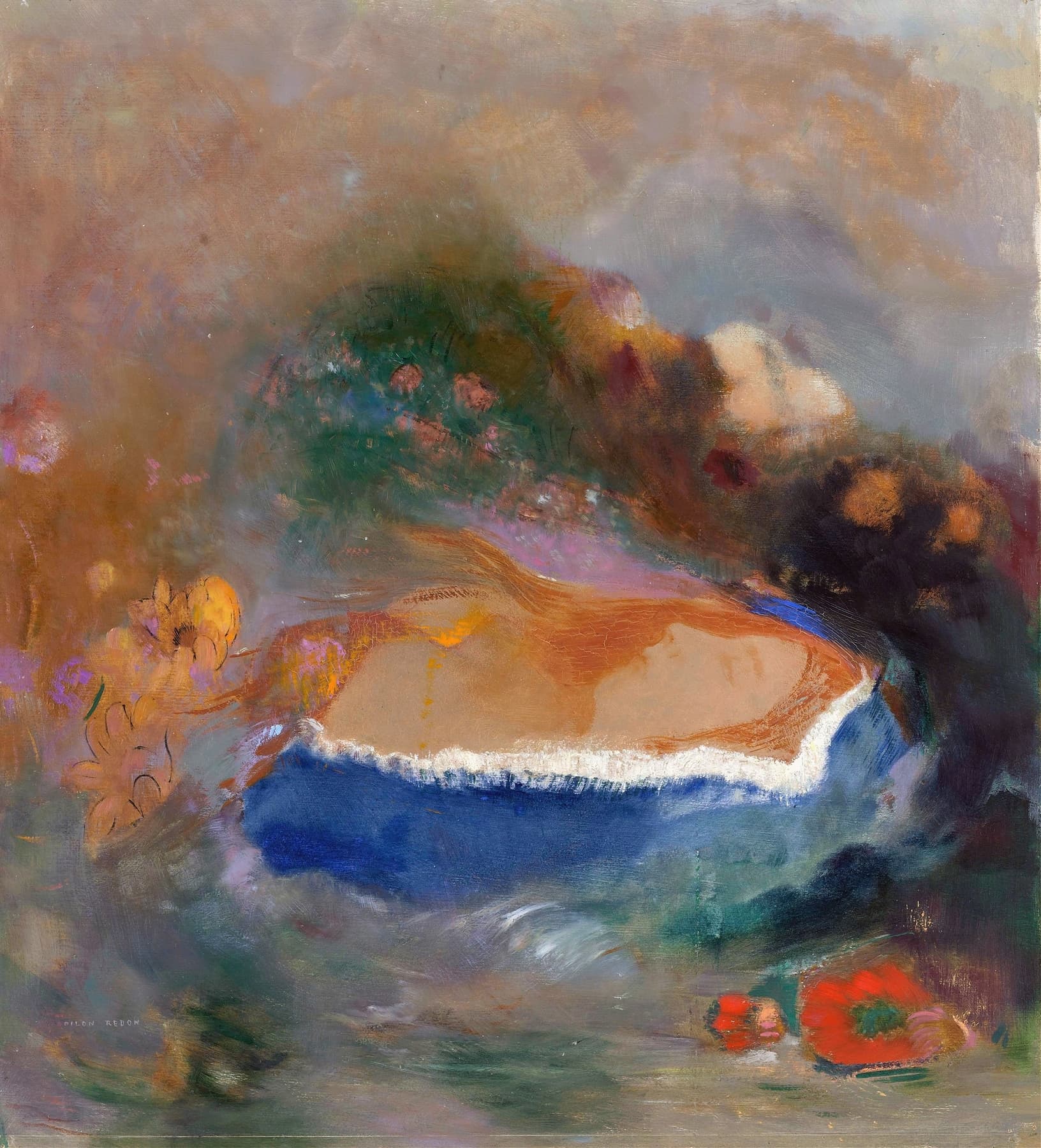
Odilon Redon - "Ophelia with a Blue Wimple in the Water" (1900 - 1905)
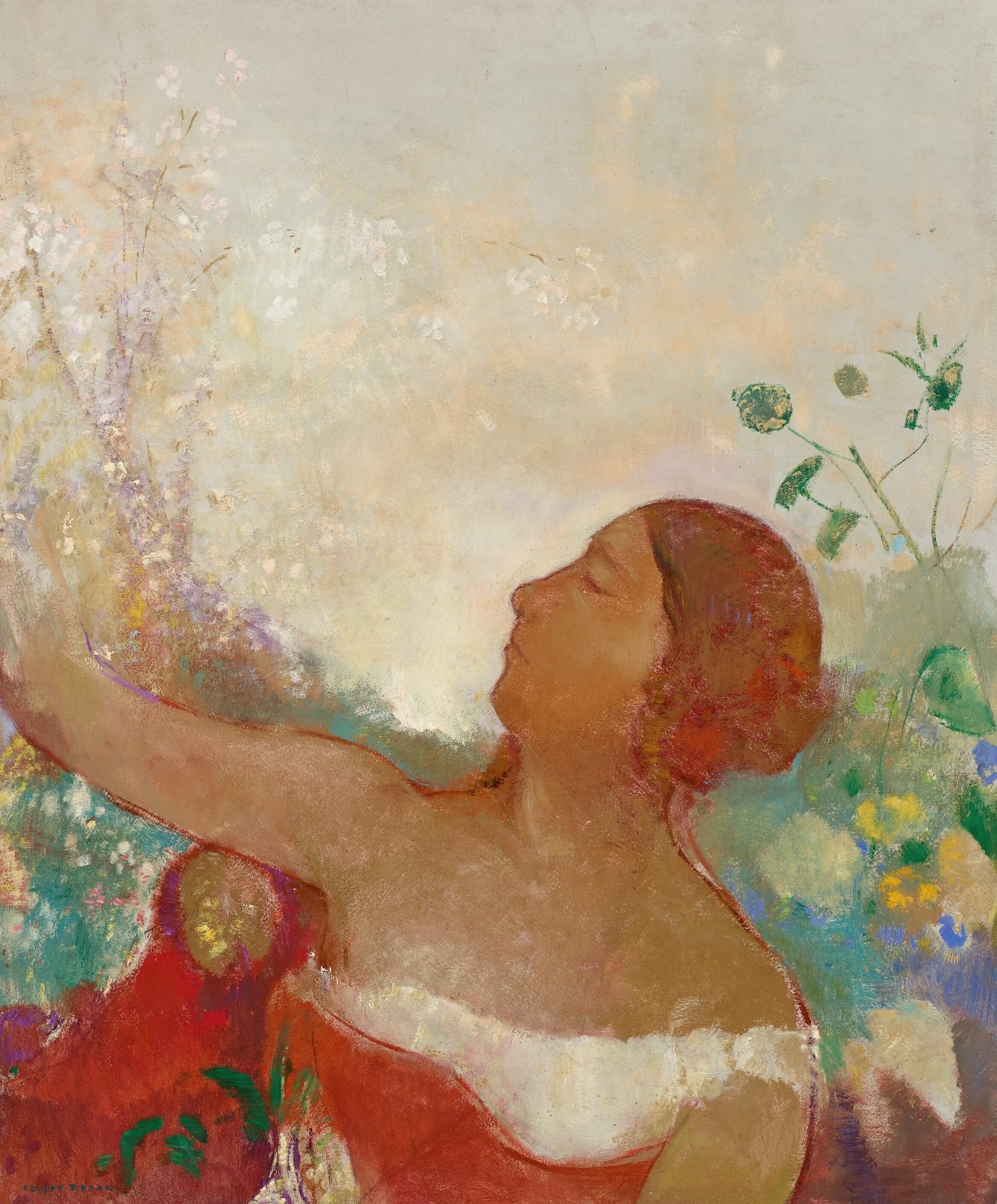
Odilon Redon - "L’enfant prédestinée, Ophélie"
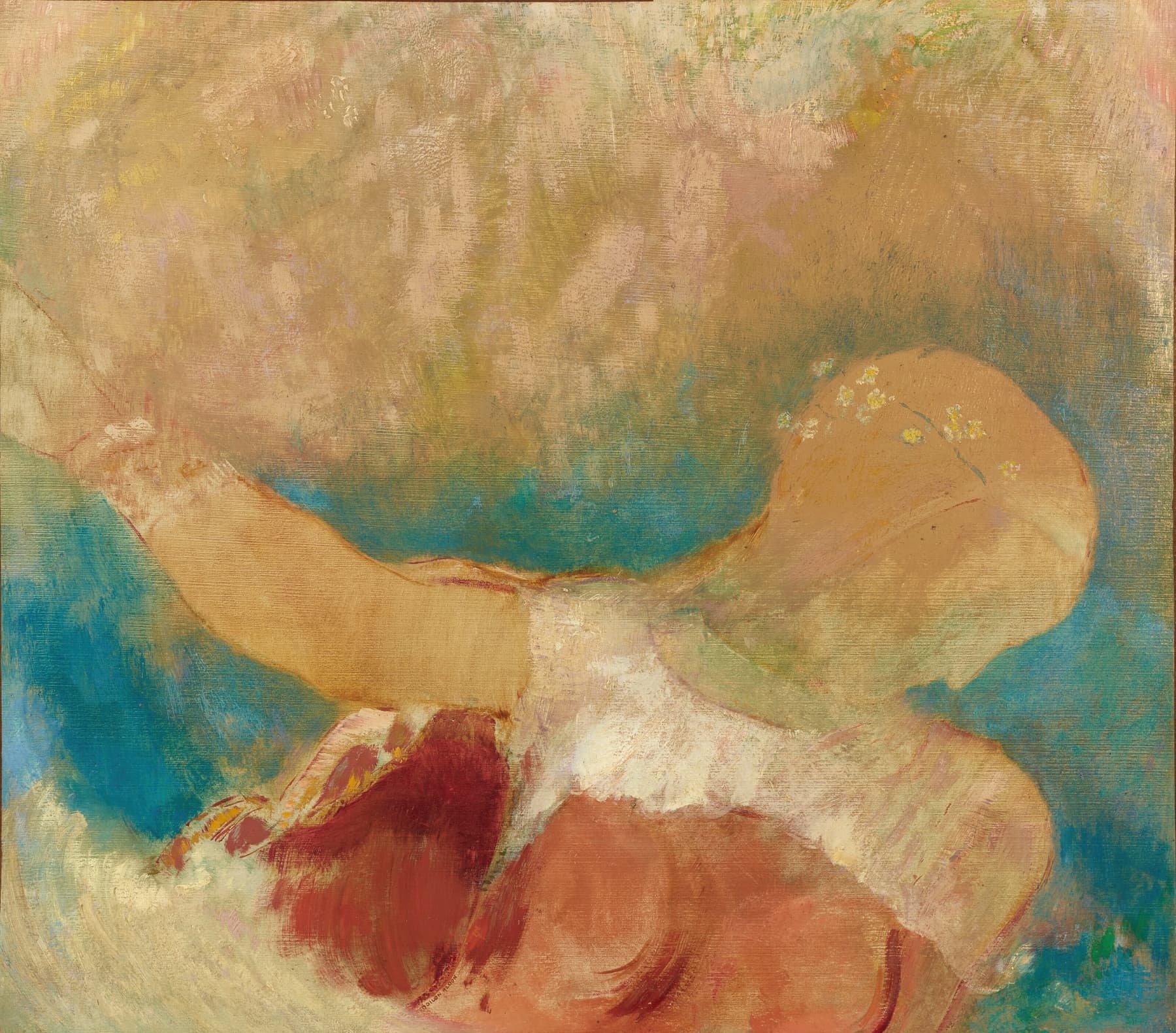
Odilon Redon - "Ophélie"
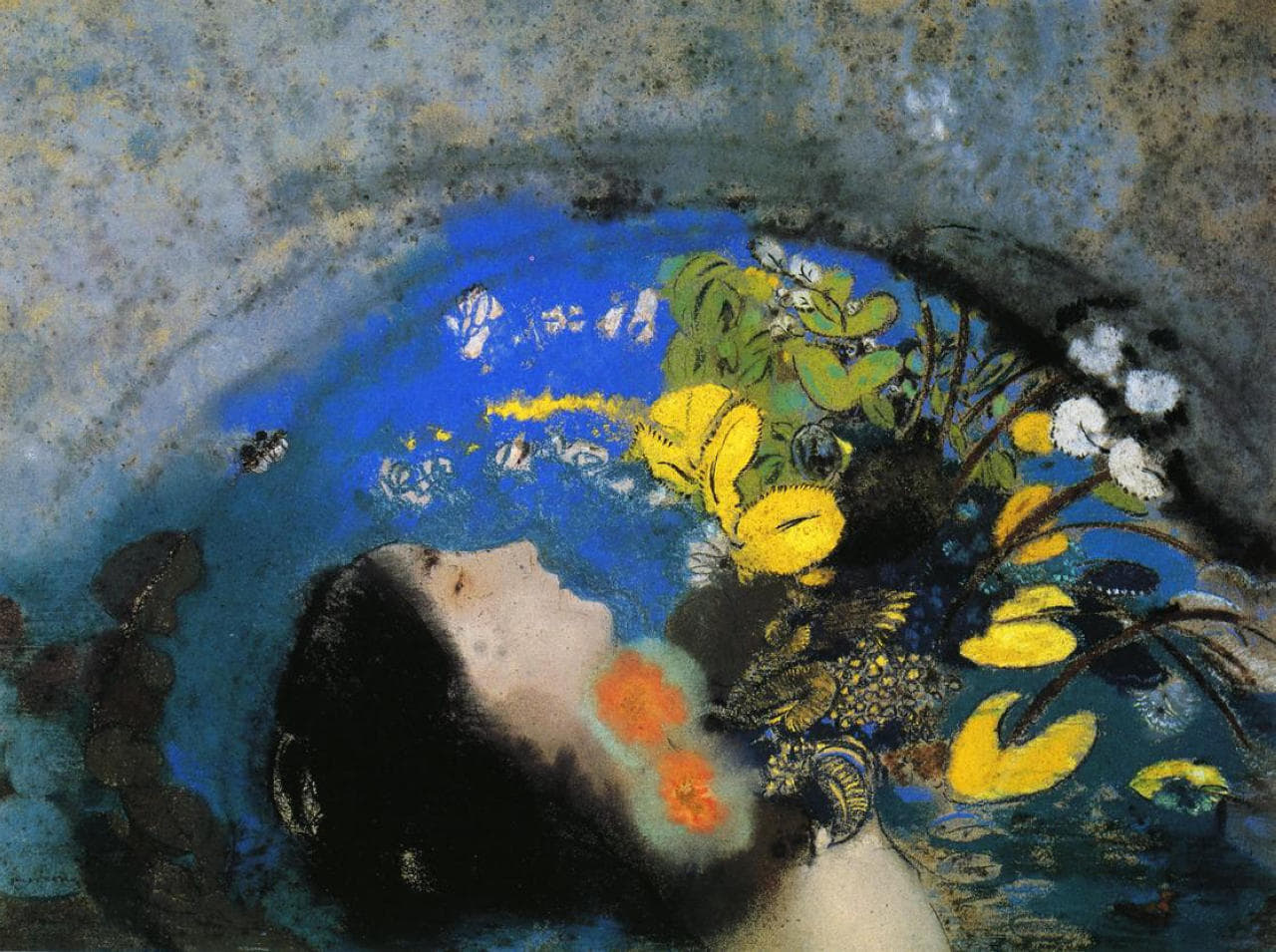
Odilon Redon - "Ophelia" (c.1903)
And will he not come again?
And will he not come again?
No, no, he is dead;
Go to thy deathbed;
He never will come again.
His beard was as white as snow,
All flaxen was his poll.
He is gone, he is gone,
And we cast away moan.
— William Shakespeare, Hamlet [words spoken by Ophelia]
There, on the pendant boughs her coronet weeds
Clamb'ring to hang, an envious sliver broke,
When down her weedy trophies and herself
Fell in the weeping brook. Her clothes spread wide
And mermaid-like, awhile they bore her up;
Which time she chanted snatches of old tunes,
As one incapable of her own distress,
Or like a creature native and endued unto
that element. But long it could not be
Till that her garments, heavy with their drink,
Pulled the poor wretch from her melodious lay
To muddy death.
— William Shakespeare, Hamlet [Ophelia's death]